


Types Of Toilet Seat Hinges
Jan 12, 2024
What Are the Different Types of Toilet Seat Hinges?
The main toilet seat hinge options include standard hinges, top-fix hinges, soft-close hinges and quick-release hinges. D-shaped toilet seats also use hinge designs suited to their shape and mounting dimensions.
Choosing the right hinge requires more than matching its appearance. The fixing method, closing action, removal mechanism and toilet pan dimensions all affect compatibility and everyday use.
Five Common Toilet Seat Hinge Options
Toilet seat hinges can be grouped by how they attach to the toilet, how they control closing and whether the seat can be removed for cleaning. Some products combine several of these features in one hinge system.
1. Traditional Toilet Seat Hinges
Traditional hinges provide a straightforward connection between the toilet seat and the ceramic pan. Standard versions allow the seat and lid to open and close manually without a damping mechanism.
They are commonly considered when simple operation and replacement cost are priorities. The fixing hardware must still match the toilet's mounting holes and installation access.
2. Top-Fix Toilet Seat Hinges
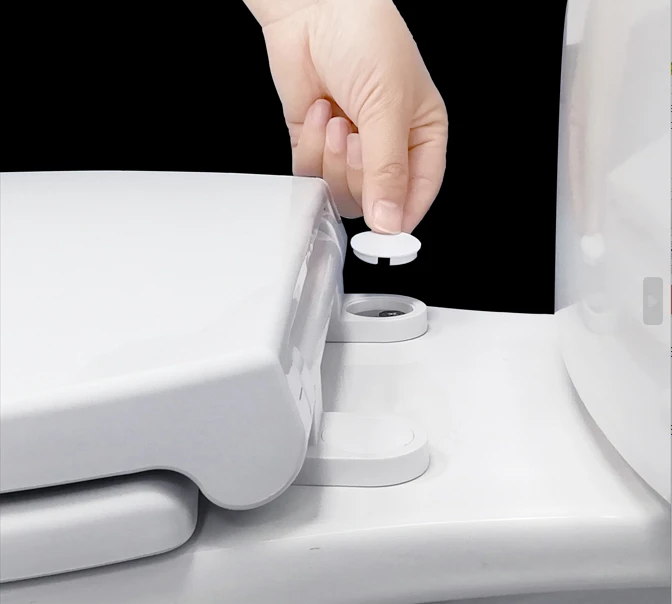
Top-fix hinges are installed from above the toilet pan. This makes them particularly useful when the underside of the fixing holes is difficult to reach, as with many back-to-wall or enclosed toilet designs.
Top fixing describes the installation method. It does not automatically mean the seat has soft-close or quick-release functionality.
- Installed from the top of the ceramic pan
- Useful where underside access is restricted
- Available in different fixing and hinge configurations
3. Soft-Close Toilet Seat Hinges
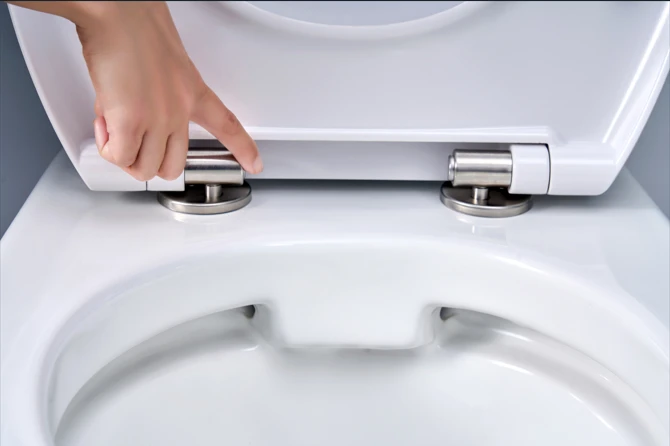
Soft-close hinges use an integrated damping mechanism to slow the movement of the seat or lid as it closes. This helps prevent sudden slamming and provides a more controlled closing action.
The closing speed and mechanism vary by hinge design. A soft-close hinge may also include a quick-release feature, but the two functions are separate.
4. Hinges for D-Shaped Toilet Seats
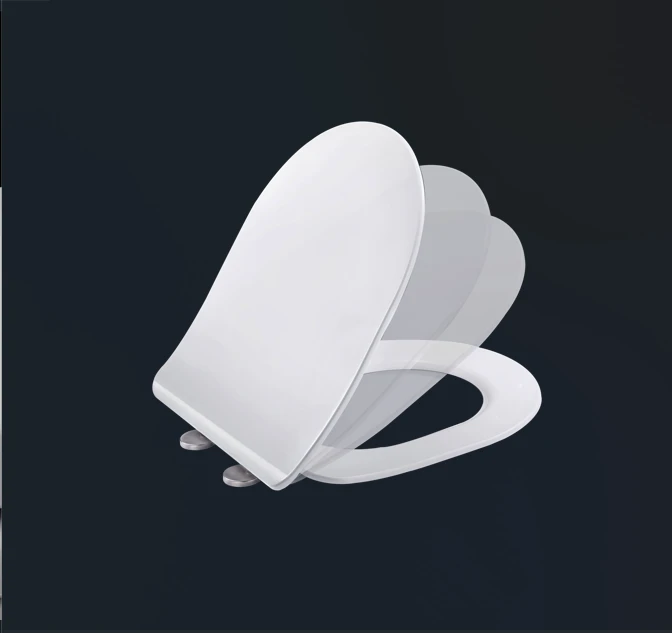
D-shaped toilet seats have a flatter rear profile and a rounded front. Their hinge assemblies must suit the seat geometry, mounting positions and ceramic pan dimensions.
D-shape describes the seat profile, rather than a separate closing mechanism. D-shaped seats can be supplied with standard, soft-close or quick-release hinge systems.
- Check the distance between fixing holes
- Measure the seat length and width
- Match the hinge adjustment range to the toilet pan
5. Quick-Release and Detachable Hinges
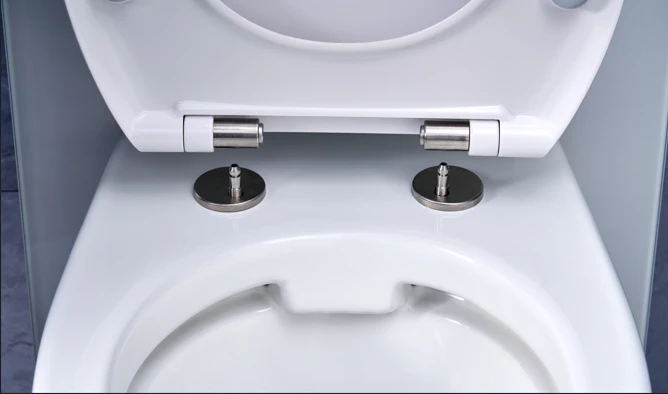
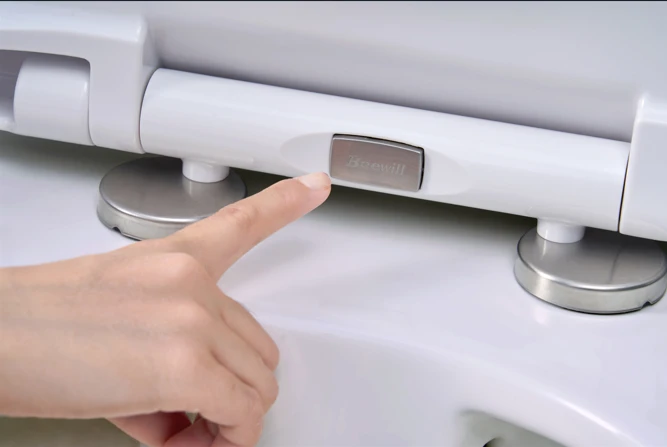
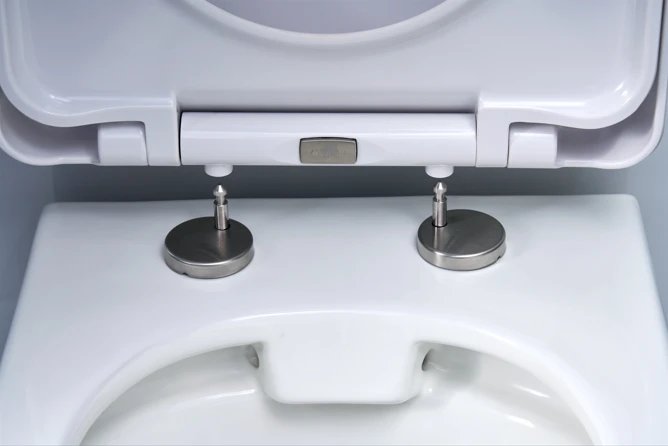
Quick-release hinges allow the seat to be detached from its mounting points for easier cleaning around the hinges and the rear of the toilet pan.
Depending on the design, removal may use a single push button, two buttons or another release mechanism. The fixing bases normally remain attached to the ceramic pan.
Toilet Seat Hinge Types Compared
| Hinge Option | Main Feature | Selection Priority | Key Consideration |
|---|---|---|---|
| Traditional | Standard opening and closing | Simple replacement and everyday use | Fixing dimensions and hardware compatibility |
| Top Fix | Installation from above the toilet | Restricted underside access | Top-fixing kit and mounting-hole design |
| Soft Close | Damped, controlled closing | Quiet and controlled operation | Damper performance and seat compatibility |
| D-Shape Compatible | Suitable for a D-shaped seat profile | Correct seat-to-pan fit | Seat geometry and hinge adjustment range |
| Quick Release | Seat removal for cleaning | Easy cleaning and maintenance | Release mechanism and refitting alignment |
How to Choose the Right Toilet Seat Hinges
Before choosing replacement hinges or specifying hardware for a new toilet seat range, check the ceramic pan and the required functions.
- Identify the fixing method. Determine whether the toilet requires top-fix or bottom-fix hardware.
- Measure the fixing-hole spacing. Compare the center-to-center distance with the hinge adjustment range.
- Check the toilet seat shape. Confirm whether the seat is round, elongated, D-shaped or another profile.
- Select the closing function. Choose standard close or soft close according to the product requirement.
- Decide whether quick release is needed. Consider how frequently the seat may need to be removed for cleaning.
- Review the complete fixing kit. Check hinge bases, screws, expansion fittings and covers.
Top-Fix vs. Bottom-Fix Toilet Seat Hinges
The difference between top-fix and bottom-fix hinges is how the fixing hardware is installed.
Top-Fix Installation
Fixings are secured from above the toilet pan. This is useful when access beneath the mounting holes is limited.
Bottom-Fix Installation
Fixings are secured from below the toilet pan, typically using accessible bolts and nuts.
Correct Hardware Fit
Hole size, mounting access and fixing-kit design determine which installation method is suitable.
Soft-Close and Quick-Release Hinge Configurations
Beewill offers different hinge configurations for duroplast toilet seats, including one-button and two-button soft-close quick-release designs, as well as regular non-soft-close options.
One-Button Quick Release
A single-button mechanism allows the seat to be released from its fixing points.
Two-Button Quick Release
A two-button mechanism provides another removal option for compatible toilet seat designs.
Regular Hinges
Non-soft-close hinges are available for applications that do not require damped closing.
Explore our toilet seat hinge options and fixing accessories for available configurations.
Common Toilet Seat Hinge Problems
Loose or Moving Seat
Check whether the fixing bolts are secure and whether the hinge bases match the mounting holes.
Uneven Closing
Check the seat alignment and inspect the damping mechanism if the soft-close action becomes inconsistent.
Difficult Seat Removal
Identify the release mechanism and check that the hinge pins and fixing bases are correctly aligned.
Hinge Specifications for Wholesale Toilet Seat Orders
For distributors and private-label bathroom brands, the hinge system affects product compatibility, customer experience and after-sales maintenance.
A clear hinge specification should include:
- Seat model and ceramic pan compatibility
- Top-fix or bottom-fix installation
- Fixing-hole spacing and adjustment range
- Standard-close or soft-close function
- Quick-release mechanism, if required
- Hinge material, finish and fixing accessories
- Product testing and packaging requirements
These details help buyers compare hinge configurations and select suitable toilet seat models for their target markets.
Explore Toilet Seats and Hinge Accessories
Browse compatible seat designs, hinge mechanisms and fixing components for your product range.
Find the Right Hinge Configuration for Your Toilet Seats
Contact Beewill to discuss toilet seat models, hinge functions, fixing dimensions and OEM supply requirements.
Discuss Your Hinge RequirementsFrequently Asked Questions
- What are the main types of toilet seat hinges? +
Common options include traditional, top-fix, soft-close and quick-release hinges. The correct choice also depends on the toilet seat shape and fixing dimensions.
- What is the difference between top-fix and bottom-fix hinges? +
Top-fix hinges are installed from above the toilet pan, while bottom-fix hinges are secured from underneath. The toilet's mounting-hole design and available access determine which method is suitable.
- Are soft-close and quick-release hinges the same? +
No. Soft close controls the speed of closing, while quick release allows the seat to be detached for cleaning. A hinge system can combine both functions.
- Do D-shaped toilet seats need special hinges? +
They need hinges compatible with the seat geometry and ceramic fixing positions. D-shaped seats may use standard, soft-close or quick-release hinge configurations.
- What measurements are needed to select replacement hinges? +
Check the fixing-hole spacing, mounting-hole dimensions, seat shape and hinge adjustment range. The installation method and seat model are also important.
- Can a quick-release toilet seat be removed without tools? +
Many quick-release designs allow the seat to be detached without tools after the fixing bases have been installed. The removal method depends on the release mechanism.
- Can Beewill supply different hinge options for OEM toilet seats? +
Yes. Beewill offers regular, soft-close and quick-release hinge options for compatible toilet seat models. Buyers can discuss fixing requirements, hinge finishes and product configurations.


