

concealed flush tank capacity
Jul 23, 2024
What Is the Standard Concealed Flush Tank Capacity?
A common concealed toilet cistern configuration is a 3/6-liter dual flush, which uses approximately 3 liters for the reduced flush and 6 liters for the full flush. Other systems offer 3/4.5 L, 2/4.5 L or adjustable flushing volumes, depending on the model and toilet bowl requirements.
When comparing concealed flush tanks, it is important to distinguish between the total water stored inside the cistern and the amount of water released during each flush. The figures shown in a dual-flush specification usually describe flushing volumes rather than the physical storage capacity of the tank.
The best flushing volume is not necessarily the largest one. It is the configuration that delivers effective bowl clearance, reliable operation and appropriate water use when matched with a compatible toilet.
Tank Storage Capacity vs. Flush Volume
These two measurements describe different aspects of a concealed flushing system. Confusing them can lead to incorrect product comparisons or installation specifications.
Tank Storage Capacity
The amount of water the cistern can hold at its specified fill level. This depends on the tank body and inlet-valve setting.
Full-Flush Volume
The amount of water discharged during a full flush. For example, a 6 L setting is intended to release approximately 6 liters per operation.
Reduced-Flush Volume
The smaller discharge selected by the reduced-flush button, commonly used when less water is required.
A concealed cistern described as "3/6 L" should therefore not automatically be interpreted as having a total storage capacity of 6 liters. Confirm the manufacturer's tank and valve specifications if actual stored water volume is important to the project.
Common Concealed Cistern Flush Volumes Compared
Concealed cisterns are available with different flushing configurations. The following table explains how commonly encountered specifications should be interpreted.
| Flush Configuration | Reduced Flush | Full Flush | Selection Consideration |
|---|---|---|---|
| 3 / 6 L | 3 L | 6 L | Widely used dual-flush arrangement; verify toilet bowl compatibility |
| 3 / 4.5 L | 3 L | 4.5 L | Lower full-flush volume for a compatible toilet system |
| 2 / 4.5 L | 2 L | 4.5 L | Model-specific low-volume option requiring suitable bowl performance |
| 3 / 6.5 L | 3 L | 6.5 L | Available on selected cistern models; check project requirements |
| Adjustable Dual Flush | Model-dependent | Model-dependent | Confirm the approved adjustment range and tested toilet combination |
Higher-volume configurations, such as 4.5/9 L or 7.5/12 L, may appear in particular product discussions, but they should not be treated as universal concealed-cistern standards. Their suitability depends on the actual model, toilet design and applicable market requirements.
How a Concealed Dual-Flush Tank Controls Water Use
A concealed cistern stores water behind the wall, inside a furniture unit or within a purpose-designed installation structure. The visible flush plate activates the flushing mechanism.
In a dual-flush system, the selected control determines whether the flush valve releases the reduced or full flushing volume.
- Water fills the cistern. The inlet valve stops the supply when the specified fill level is reached.
- The user selects a flush. The reduced-flush or full-flush button activates the outlet mechanism.
- Water enters the toilet bowl. The discharge is governed by the valve configuration and toilet system.
- The cistern refills. The inlet valve restores the water level for the next operation.
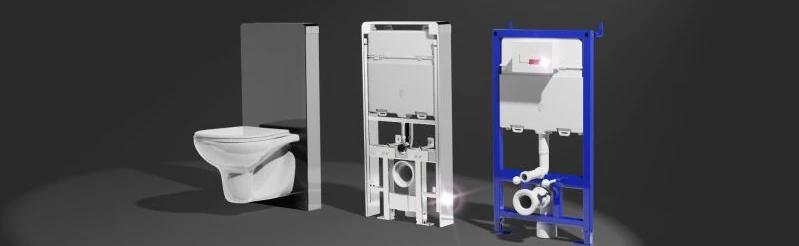
Illustration from the original Beewill concealed flush tank capacity article.
How Much Water Can a Dual-Flush Cistern Save?
Water savings depend on the selected flush volume and how often each button is used. A simple example shows the difference between using a 6-liter flush every time and using a 3/6-liter dual-flush arrangement.
Assume eight flushes per day, with four full flushes and four reduced flushes.
6 L for Every Flush
48 L / day8 flushes × 6 liters = 48 liters of water used.
3/6 L Dual Flush
36 L / day(4 × 6 liters) + (4 × 3 liters) = 36 liters of water used.
In this illustrative scenario, the dual-flush system uses 12 liters less per day, equivalent to a 25% reduction in flushing water compared with the all-6-liter scenario.
Actual consumption varies with user behavior, valve settings, leakage, flush performance and whether repeat flushing is necessary. The example is a calculation, not a measured water-saving claim for a specific product.
Does a Larger Concealed Flush Tank Give a Stronger Flush?
Not necessarily. A larger stored water volume does not automatically create higher flushing pressure or better bowl cleaning.
In a gravity-fed cistern, flushing behavior depends on factors such as the water level above the outlet, the discharge valve, the outlet geometry, the connecting pipework and the toilet bowl design.
Flush Valve Performance
The valve design and opening characteristics influence how quickly water is discharged.
Toilet Bowl Geometry
The bowl's flushing channels and trapway must work effectively with the selected water volume.
Installation Conditions
Pipe routing, cistern positioning and correct installation can affect system performance.
For this reason, select the cistern and toilet as a compatible flushing system rather than choosing the largest available tank solely to obtain a stronger flush.
Concealed Cistern Capacity Options in the Beewill Range
Beewill offers concealed cistern systems for wall-hung and back-to-wall toilets. The following examples show why flush volume should always be checked at the individual model level.
| Model / System | Toilet Application | Published Flush Information |
|---|---|---|
| BWE1900-10 | Wall-hung toilet pans | Adjustable full flush 4.0–7.0 L; reduced flush 2.0–5.0 L |
| Back-to-Wall Concealed Cistern | Floor-standing back-to-wall toilets | 6.5/3.0 L or 4.5/2.0 L options |
| CT101 Space Diamond | Wall-hung toilet installations | 6/3 L or 4.5/3 L options |
These figures describe published product configurations. They do not establish the total storage capacity of every cistern body. Confirm the final factory setting, installation drawing and applicable documentation for the model supplied.
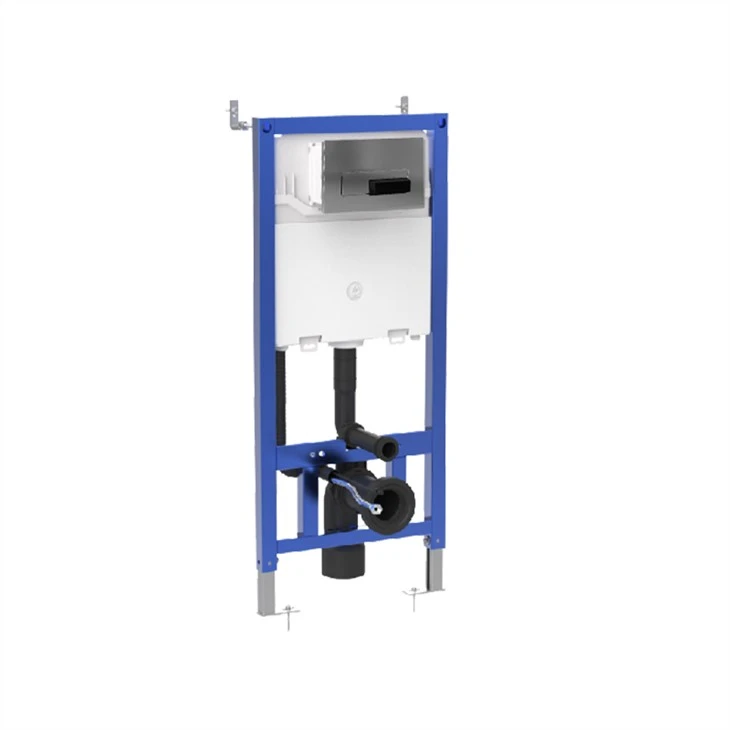
BWE1900-10 Concealed Cistern with Frame
A wall-hung toilet installation system combining a PP cistern with a steel frame and adjustable mechanical dual-flush settings.
View Cistern with Frame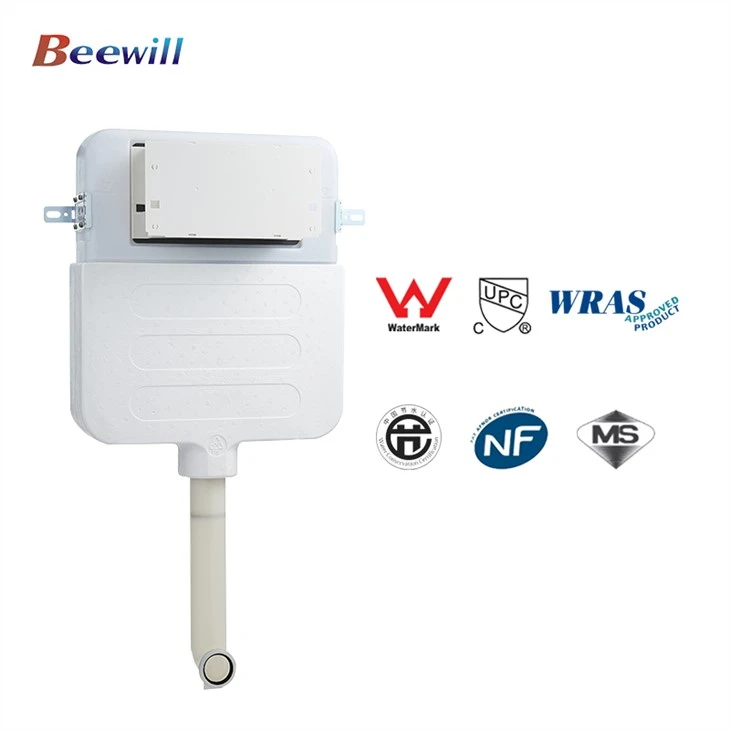
Back-to-Wall Concealed Cistern
An HDPE concealed cistern for compatible floor-standing toilets, with 6.5/3.0 L and 4.5/2.0 L flush configurations.
View Back-to-Wall CisternHow to Choose the Right Concealed Flush Tank Capacity
Selecting a concealed cistern involves more than comparing liters. The flush volume must be suitable for the toilet bowl, installation arrangement and destination market.
- Start with the toilet bowl.
Check the toilet manufacturer's recommended flushing volumes and installation requirements. A low-volume setting should only be used when the bowl is designed to perform effectively with it.
- Identify the required flush configuration.
Compare 3/6 L, 3/4.5 L or other available settings based on the approved toilet system and local requirements.
- Confirm whether the valve is adjustable.
Some models offer a defined adjustment range. Verify the factory setting and the approved adjustment procedure.
- Check the installation type.
Wall-hung toilets generally require a suitable support frame, while back-to-wall floor-standing toilets may use different concealed cistern arrangements.
- Review the flush plate and service access.
Confirm the control mechanism, panel position and access route for future maintenance.
- Request model-specific documentation.
Obtain the technical drawing, valve specification, applicable test information and installation instructions before finalizing a project order.
Installation Space and Maintenance Access
Concealed flush tank capacity is only one part of the installation decision. A cistern must also fit the wall construction and allow appropriate access to serviceable components.
Wall Depth
Check the full installed depth, including the cistern, frame where required, pipe connections and finished wall.
Toilet Support
For wall-hung toilets, confirm the support frame and fixing arrangement for the intended installation.
Service Opening
Confirm whether the inlet valve, outlet valve and other service components can be reached through the flush plate opening.
Do not assume that every concealed cistern requires the same wall depth or that every repair involves opening the wall. Access arrangements differ by product design, so review the service instructions before installation.
A qualified installer should verify the water connections, mounting arrangement and flush operation according to the manufacturer's instructions and applicable local requirements.
Common Mistakes When Comparing Flush Tank Capacity
| Common Assumption | More Accurate Approach |
|---|---|
| A 3/6 L cistern stores exactly 6 liters. | Treat 3/6 L as a flush-volume specification unless the manufacturer separately confirms total tank storage capacity. |
| More water always produces a better flush. | Assess the cistern, flush valve and toilet bowl as a complete system. |
| Every dual-flush cistern can be adjusted to any volume. | Check the approved adjustment range for the specific valve and model. |
| All concealed cisterns fit the same wall cavity. | Review the product's complete installation drawing and required service clearances. |
| Flush volume alone proves water efficiency. | Consider effective bowl clearance, repeat flushing, leakage and applicable performance requirements. |
Concealed Cistern Capacity Checklist for B2B Buyers
For importers, sanitary ware distributors and project buyers, confirming the flushing configuration early helps reduce compatibility issues and specification changes during procurement.
| Procurement Item | Information to Confirm |
|---|---|
| Toilet Compatibility | Wall-hung or back-to-wall toilet; approved bowl and cistern combination |
| Flush Volume | Full and reduced flush settings, including adjustment range |
| Installation Dimensions | Tank dimensions, wall depth, frame size and connection positions |
| Flush Control | Mechanical, pneumatic or other supported activation mechanism |
| Maintenance Access | Flush plate opening, valve replacement and service instructions |
| Compliance | Applicable destination-market requirements and model-specific supporting documents |
| OEM Requirements | Flush panel design, branding, packaging and required configuration |
| Commercial Details | Estimated order quantity, destination country, lead time and shipping terms |
Beewill provides concealed flushing cistern solutions for wholesale, OEM and bathroom project supply. Buyers can review the Beewill Flushing Cistern Collection to compare available installation systems.
Explore Concealed Cistern Products and Guides
Need Help Selecting a Concealed Cistern Capacity?
Contact Beewill to discuss full-flush and reduced-flush settings, compatible toilet systems, installation dimensions, flush plate options and OEM supply.
Please provide your toilet type, preferred flushing volume, installation requirements, destination market and expected purchasing quantity.
Request Cistern Specifications and QuotationFrequently Asked Questions
A common concealed cistern dual-flush configuration is 3/6 liters, meaning approximately 3 liters for a reduced flush and 6 liters for a full flush. Other configurations are available, and these figures describe flushing volumes rather than necessarily the total tank storage capacity.
It means the cistern has a reduced-flush setting of approximately 3 liters and a full-flush setting of approximately 6 liters. The actual operation depends on the valve settings and installation.
It can be sufficient when the toilet bowl and flushing system are designed and tested for a 4.5-liter full flush. Check the toilet manufacturer's recommended flushing volume before selecting the cistern.
Some models support adjustment within a defined range. For example, the Beewill BWE1900-10 lists adjustable full-flush and reduced-flush settings. Always follow the approved model instructions and confirm toilet compatibility.
Not automatically. Flushing performance also depends on the water level, flush valve, outlet arrangement and toilet bowl design. A compatible cistern-and-toilet combination is more important than tank size alone.
Options vary by model. Examples include 6/3 L and 4.5/3 L for CT101, 6.5/3.0 L and 4.5/2.0 L for a back-to-wall cistern, and adjustable flush settings for BWE1900-10.
Confirm the toilet bowl's recommended flush volume, frame compatibility, mounting dimensions, available wall depth, water connections and flush plate arrangement. Review the approved technical drawings before installation.
Share the toilet installation type, required full and reduced flush volumes, wall dimensions, flush control preference, destination country, estimated quantity and any OEM packaging or branding requirements.


